


Organic tincture
"I’ve been using a powder but have heard that tinctures are more easily absorbed. I’m happy to find an organic high quality tincture!"
The go-to choice for parents who want the concentrated power of nature’s most famous immune-supporting mushroom. Dual-extracted from wild-harvested Turkey Tail mushrooms, providing the deep-level support your dog needs to stay strong, resilient, and protected from the inside out.
Couldn't load pickup availability



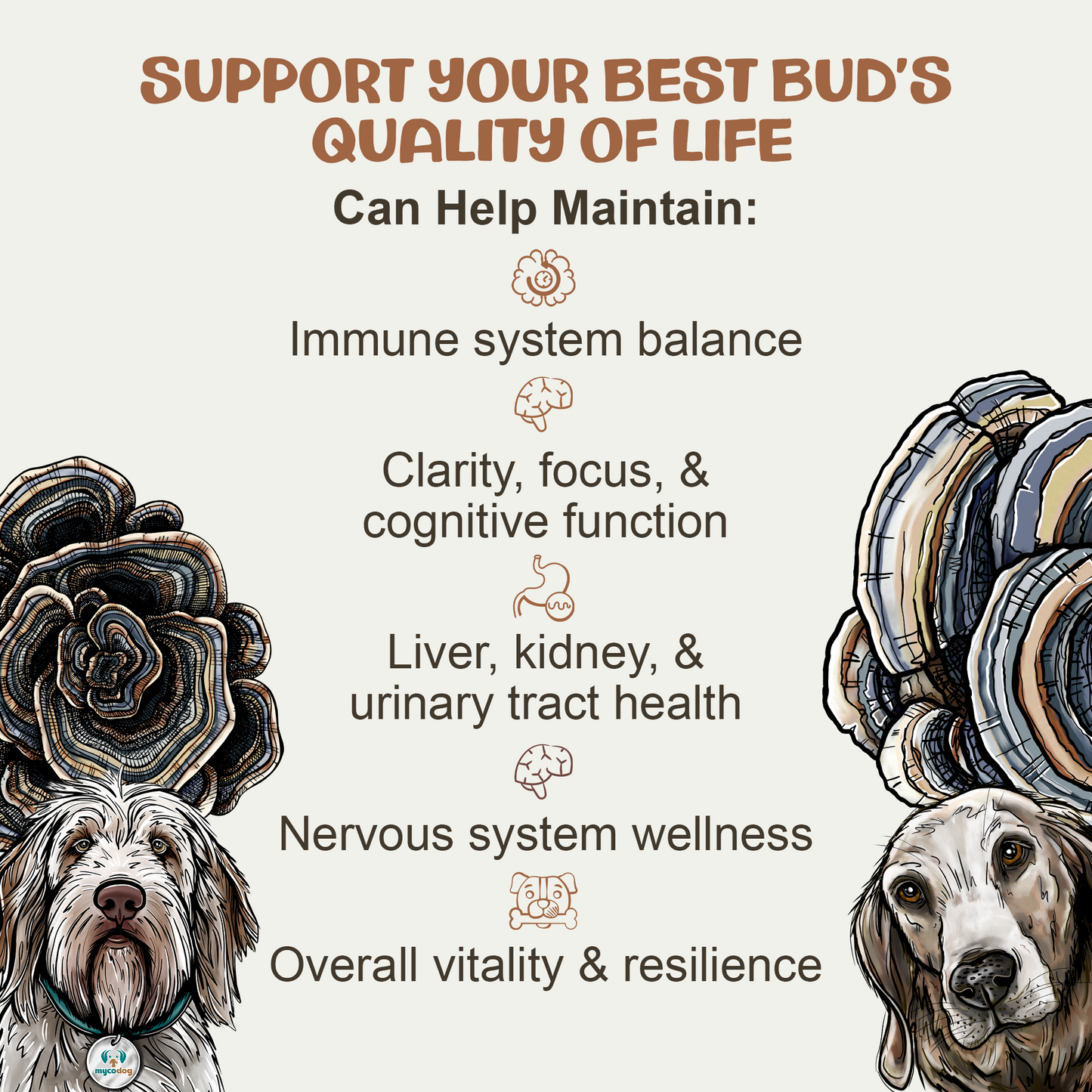
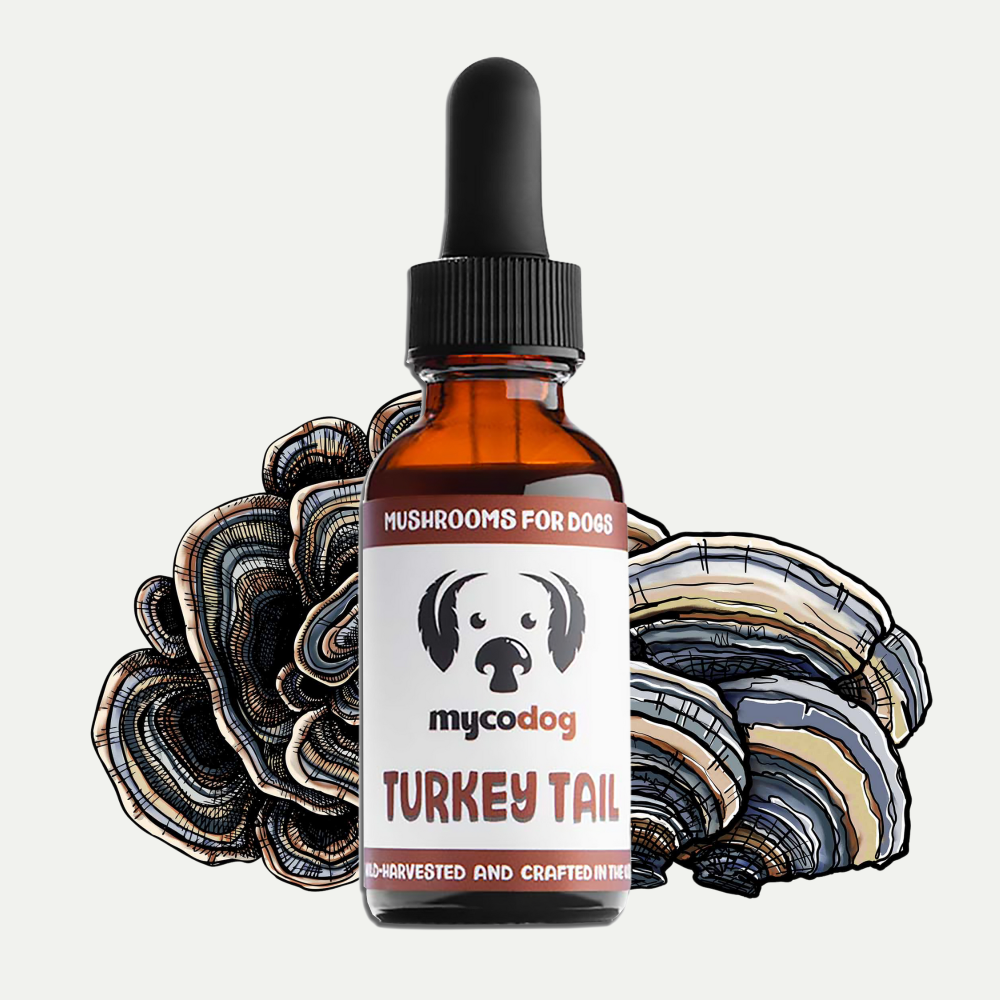


Turkey Tail is one of those mushrooms that has genuinely earned its reputation. It's packed with beta-glucans, naturally occurring compounds that have been studied extensively for how they interact with the immune system, and it's one of the most researched functional mushrooms in the world. For dogs, that translates to real, meaningful immune support and the kind of long-term wellness backing that a lot of pet parents are looking for when they add turkey tail mushrooms for dogs to their routine.
This is really where Turkey Tail shines. The beta-glucans in Turkey Tail are a specific type of polysaccharide that researchers have spent decades studying for their role in keeping the immune system balanced and responsive. Not overactive, not sluggish, just working the way it should. A lot of holistic pet parents reach for Turkey Tail mushrooms for dogs specifically because of this, and it holds up.
Turkey Tail contains specific compounds called polysaccharopeptides, PSP and PSK being the most studied, that work with the immune system at a pretty deep level to help the body identify and respond to cellular issues. It's one of the reasons Turkey Tail mushrooms for dogs gets recommended so often for dogs facing significant health challenges, but it's honestly just as valuable as a long-term tool for maintaining cellular integrity as your dog ages. Think of it less as a reaction to a problem and more as an ongoing layer of protection.
It really is, and this part surprises a lot of people. Around 80% of your dog's immune system actually lives in their gut, so what happens in the digestive tract matters a lot more than most people realize. Turkey Tail acts as a natural prebiotic, essentially fuel for the beneficial bacteria that keep your dog's microbiome balanced. A healthier gut means a stronger immune system, better digestion, and more consistent stools. It's doing a lot of work quietly in the background.
A lot of mushroom powders on the market are mostly filler, grain, starch, or ground up growing substrate with a fraction of actual mushroom in there. Even when it is real mushroom, the beneficial compounds are still locked inside the cell walls in a form that's hard for your dog's body to break down and absorb.
Our dual extraction process pulls those active compounds out of the fruiting body and into a concentrated liquid that your dog's system can actually use right away. The beta-glucans, the antioxidants, all of it goes to work faster and more efficiently than anything in powder or capsule form. You're getting the full benefit of every single drop.
Turkey Tail mushrooms for dogs has been used in holistic pet care for decades and is considered a functional food, not a drug or synthetic compound. Most dogs tolerate it really well at all life stages. As with anything new you're adding to your dog's routine, starting with a smaller amount and checking in with your vet if you have specific concerns is always a reasonable move.
Our Turkey Tail is wild-harvested in the Pacific Northwest, and that location is a deliberate choice. Mushrooms are bio-accumulators, meaning whatever is in their environment ends up in them. The Pacific Northwest gives us clean air, rich natural forest substrates, and outdoor growing conditions that you just can't replicate in an industrial facility. No grain, no fillers, no guessing about what the mushrooms were exposed to. Just Turkey Tail growing the way Turkey Tail is supposed to grow.
The way a mushroom is grown genuinely affects what ends up in it. A lot of supplement companies grow on grain or rice because it's cheaper and scales easily, but a mushroom grown on grain reflects the nutrition of that grain, not the nutrition of a wild mushroom growing on a log in a forest.
Our Turkey Tail mushrooms for dogs and cats are wild-harvested in the Pacific Northwest on natural wood-based substrates, the kind of environment these mushrooms evolved in. That's what gives them the full, rich compound profile you're actually after. And because we're sourcing right here in the US, we know exactly where they're coming from and what conditions they were grown in.
Customer reviews reflect individual experiences and are not intended to diagnose, treat, or cure any condition. Results may vary.
Overall rating: 5.0 / 5 from 6 reviews.
Review topics: [quality, issues, dog, mushrooms, tincture, tail].
"I’ve been using a powder but have heard that tinctures are more easily absorbed. I’m happy to find an organic high quality tincture!"
"We like your products and what I'm dealing with is this fairly large lymphoma on my dog's chest? I sort of like to know the amount I should be giving to see results."
"Love this for my oldest girl who has low grade oral melanoma. I even give it to my other girl too. They both tolerate it really well!!!"
"I have been giving my 2 senior fur babies this Turkey Tail tincture to help them keep their immune system working and help improve overall health. I truly believe that mushroom supplement are a must to help keep our fur babies feeling their best. This product uses wild harvested mushroom, unlike some other brands that use mycellium or farmed."
"We haven’t used it yet but we bought three bottles and we plan on giving it to our baby girl once a day with her other mushroom tinctures like vitality and breathewe also bought Chaga and Reshi god bless🙏"
"Love the turkey tail mushrooms for my dog with lymphoma."

We are proud to showcase our high-quality mushrooms for pets. That’s why we make all of our products’ thorough third-party lab test findings public. We can ensure that all of our goods are of uniform quality and free of pesticides, heavy metals, and pathogens by using non-affiliated laboratories to test them.

We hold ourselves to the highest standard when it comes to your pet’s satisfaction. If you are not satisfied with your product, you are eligible for a refund within 30 days. Please see our policy page for more information.

Mycodog accepts orders 24 hours a day, 7 days a week. Orders are mailed from Colorado Monday through Friday and are shipped within the shipping services’ operating business days.